
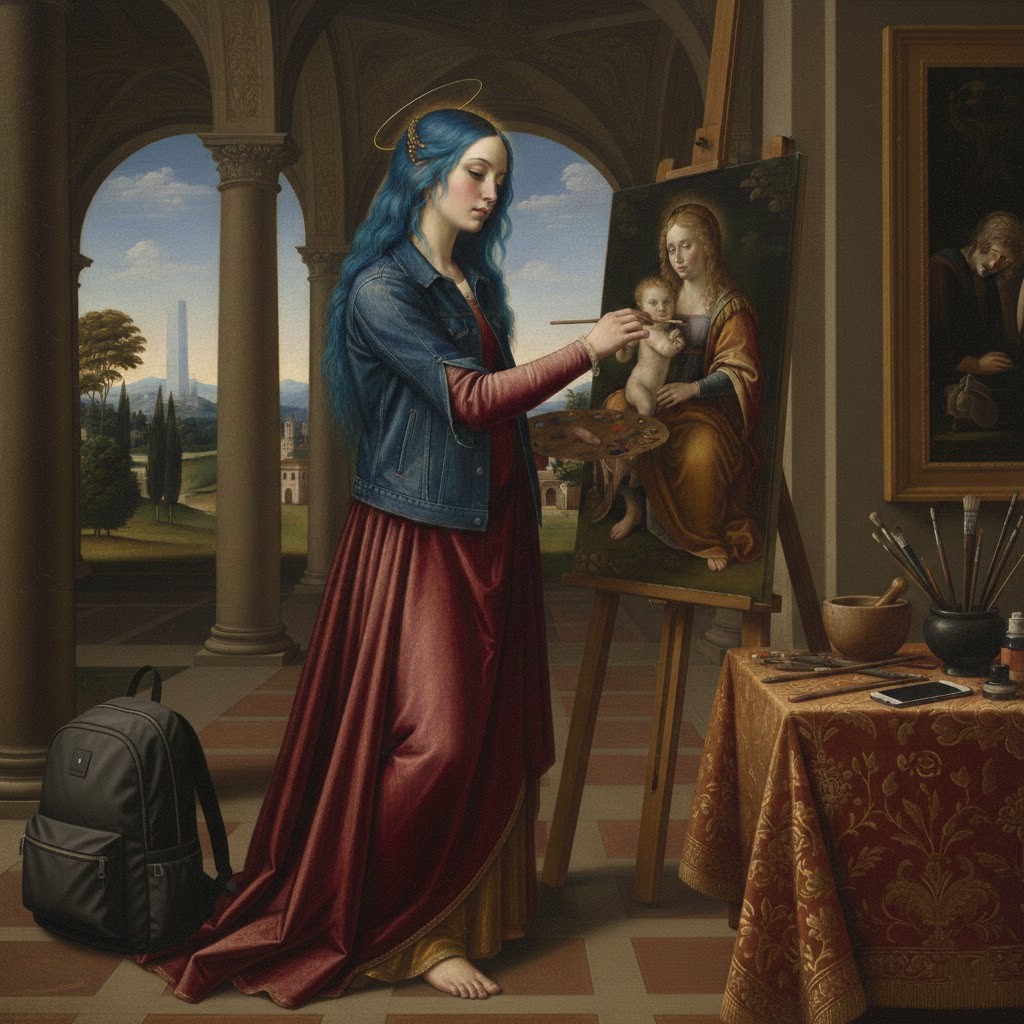

Something strange is happening in art studios across the world. While everyone expects young artists to be glued to their iPads and Wacom tablets, a growing number of them are instead covered in ink stains, plaster dust, and molten glass burns.
Meet the generation that grew up with smartphones but chose to master fresco painting, the same technique Michelangelo used on the Sistine Chapel ceiling. They’re learning letterpress printing on 100-year-old machines and spending years perfecting the art of glassblowing. And they’re doing it all while building massive followings on TikTok and Instagram.
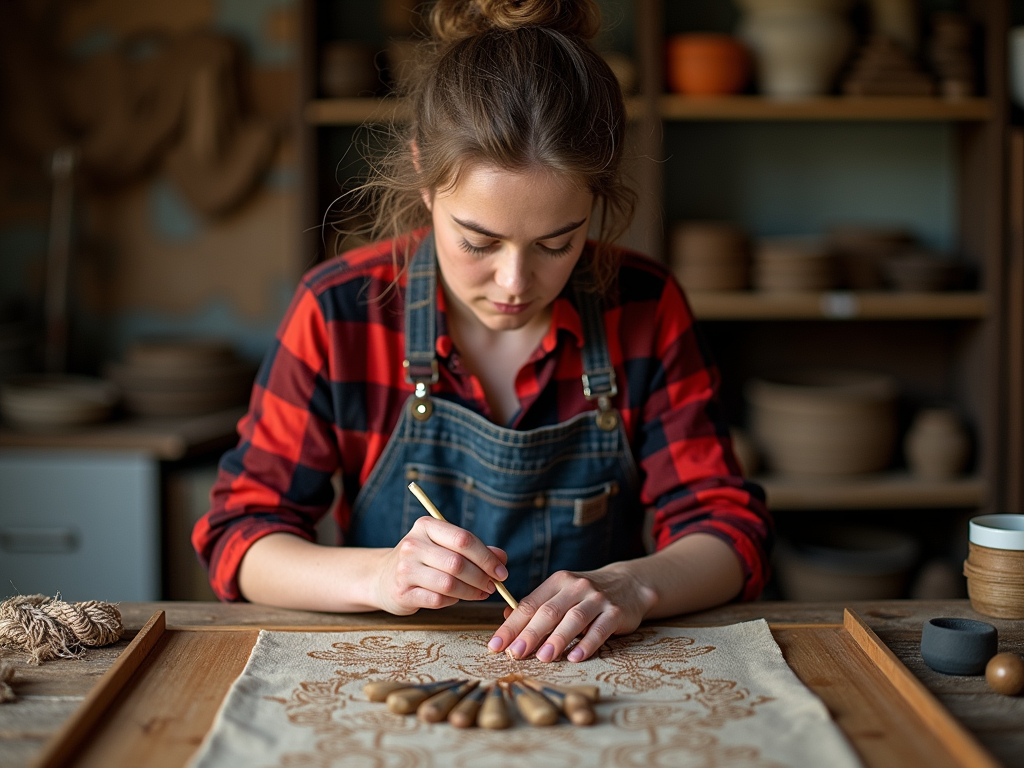
Twenty-three-year-old Maria Chen went viral last year with a video of herself mixing pigments the old-fashioned way, grinding lapis lazuli into the brilliant blue paint that Renaissance masters once valued more than gold. Her account now has over 2 million followers who watch her create egg tempera paintings using recipes from the 1400s.
“Everyone told me I was crazy,” Chen says. “Why would I spend six months learning to prepare a wooden panel when I could just open Procreate? But there’s something about working with your hands, about connecting to artists from 600 years ago through the exact same process. You can’t get that from a screen.”
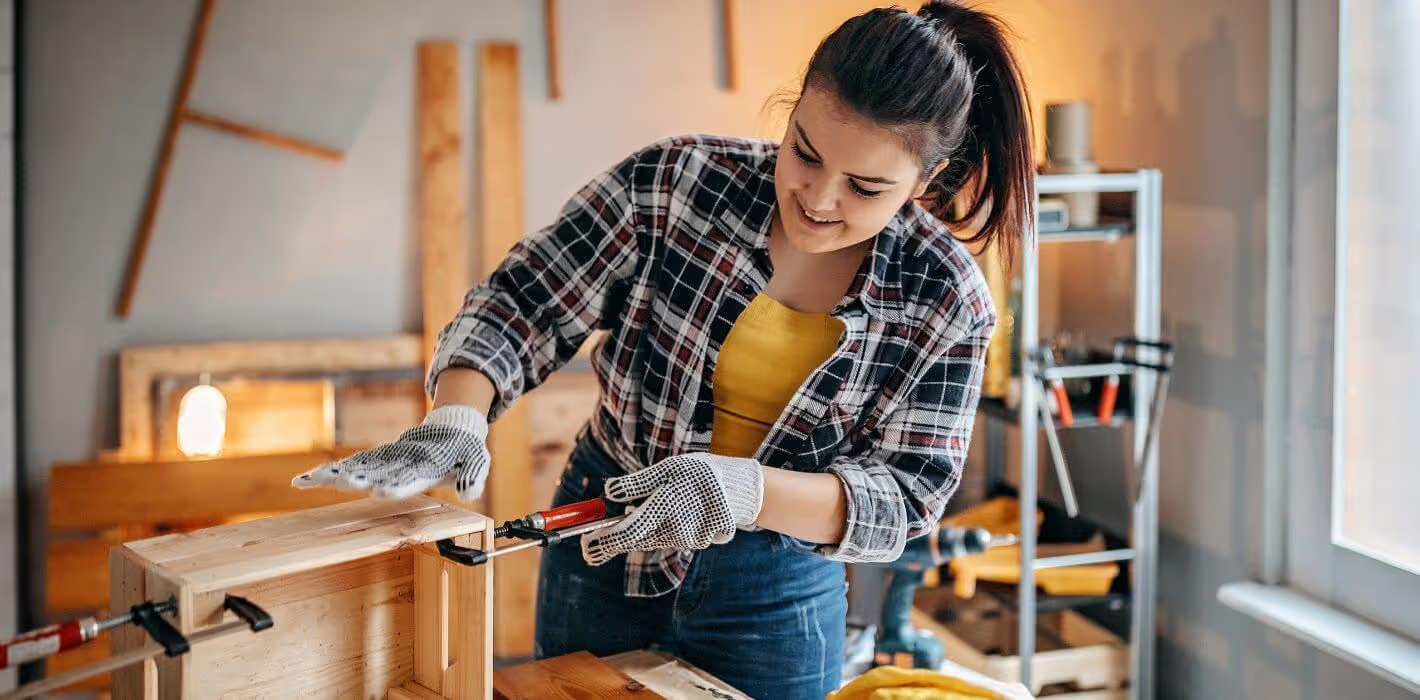
She’s not alone. Across platforms, videos of young artists practicing ancient techniques are racking up millions of views. A 19-year-old in Portland documents his journey learning Japanese woodblock printing. A 26-year-old in Berlin films herself working on massive tapestries that take months to complete. These aren’t just hobbyists. Many are selling their work for thousands of dollars and getting gallery shows.
Dr. James Walsh, an art historian at Columbia University, calls it a “predictable rebellion.” When everything becomes instant and digital, the slow and physical becomes precious. “We’re seeing the same pattern that happened with vinyl records and film photography,” he explains. “The supposed limitations of old mediums become their appeal. They require patience, skill, and physical presence.”
But there’s more to it than simple nostalgia. These young artists are proving that traditional techniques can create effects that digital tools simply cannot replicate. The way light plays through hand-blown glass. The subtle imperfections in hand-printed letters. The depth and luminosity of paint made from ground minerals.
Twenty-eight-year-old Andre Williams spent two years learning encaustic painting, an ancient technique using heated beeswax mixed with pigments. “Digital art is amazing, but it exists in a completely different realm,” he says. “When someone stands in front of my work, they can see the texture, smell the wax, understand the physical labor. It creates a different kind of connection.”

What’s really interesting is how these artists are blending old and new. They’re using social media to find rare apprenticeships, crowdfunding to buy expensive equipment, and building online communities around forgotten crafts. A 24-year-old in Mexico City teaches gold leaf application through YouTube tutorials that have been watched over 5 million times.
The movement is also raising important questions about what we value in art. In a world where AI can generate images in seconds, maybe the human touch, the evidence of time and effort, matters more than ever. When everything can be perfect and instant, imperfection and slowness become radical acts.

These young artists aren’t rejecting technology. They’re choosing to work in mediums that can’t be automated or mass-produced. They’re creating art that proves a human being was here, took time, learned something difficult, and made something that will last.
And judging by their growing audiences, people are hungry for exactly that.




Leave a Reply