
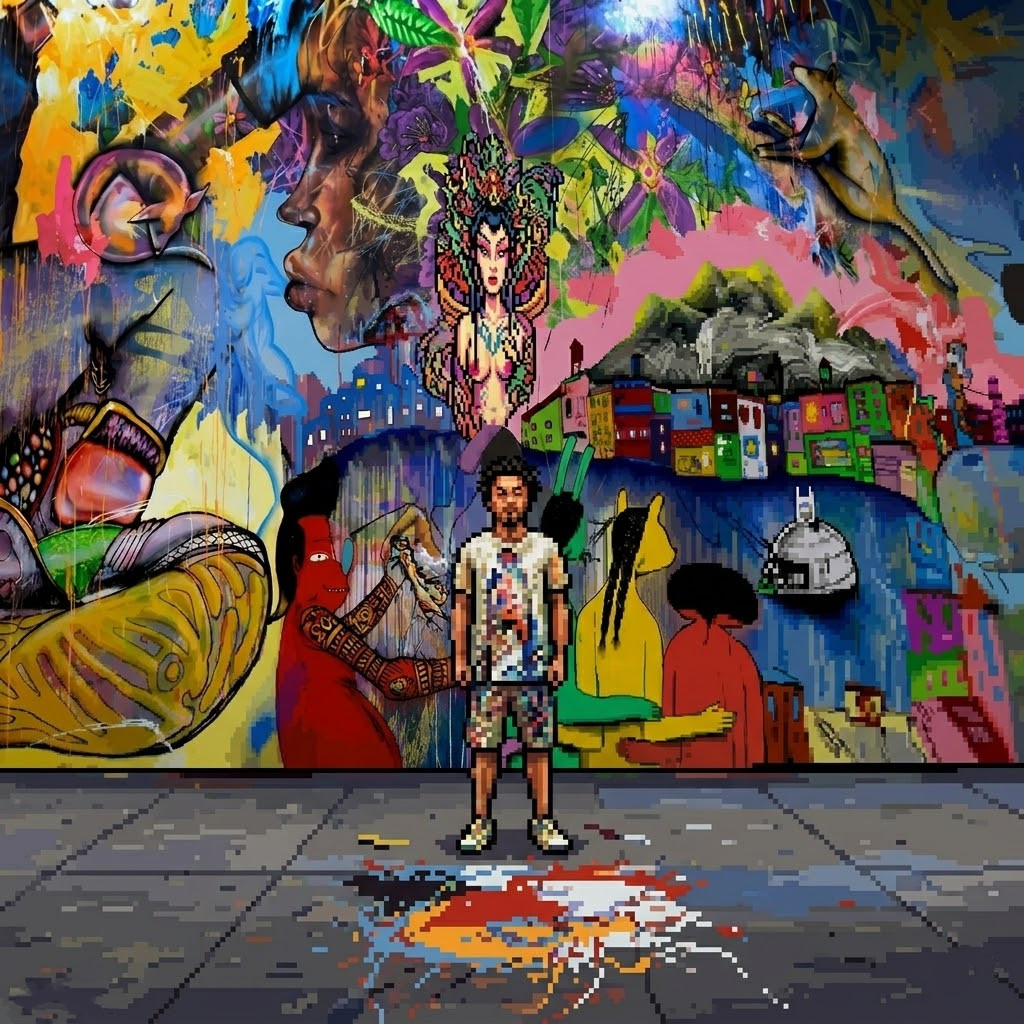

In 2005, a young graffiti artist named David Choe was offered a job that most people in his position would have turned down without a second thought. Paint the walls of a small tech startup’s first real office in Palo Alto, California, and get paid in either cash or company stock. The company was Facebook. David Choe, who had no particular reason to believe in a social network that barely existed yet, took the stock.
Seven years later, when Facebook went public in 2012, that decision made him worth an estimated $200 million.
Who Is David Choe and Where Did He Come From

David Choe grew up in Los Angeles, the son of Korean immigrants, and from an early age it was clear that keeping him away from walls and spray cans was a losing battle. He wasn’t interested in formal art training or galleries or the kind of career his parents had imagined for him. He was interested in painting every surface he could find, legally or not, in a raw, visceral style that mixed graffiti with fine art influences and didn’t particularly care what the art world thought about it.
Through his 20s he built a reputation in underground circles, got arrested in Japan for graffiti in 2003 and spent time in prison there, and kept working anyway. His art was loud, chaotic, figurative and impossible to ignore if you happened to see it, but the mainstream art world hadn’t come knocking and he wasn’t waiting around for it to.
The Facebook Office and the Decision That Changed Everything

When Sean Parker, Facebook’s first president, brought David Choe in to paint murals across the walls of the company’s first Palo Alto headquarters, the fee offered was a few thousand dollars. Choe has said in interviews that he thought the whole idea of Facebook was ridiculous and that the stock would probably turn out to be worthless, but something made him take it anyway.
He spent days covering those walls in his signature style, dense, energetic, unapologetically strange murals that reflected exactly the kind of outsider creative energy the early Facebook team apparently wanted surrounding them while they built something new. Then he walked away and mostly forgot about it.
What he couldn’t forget, and neither could anyone else, was what happened when Facebook filed for its IPO in 2012. The stock Choe had accepted in place of a few thousand dollars in cash had grown into a stake worth somewhere between $200 and $500 million depending on which estimate you believe. Overnight, a graffiti artist who had once done prison time for illegal painting became one of the wealthiest artists in the world.
What David Choe Did After the Facebook Fortune

The money didn’t turn David Choe into a different person, which is either admirable or complicated depending on how you look at it. He kept making art in the same unapologetic style, continued taking on projects that interested him rather than ones that made financial sense, and became a podcast host and media personality known for being unpredictable and brutally honest about his own flaws and failures.
His story sits in a strange category, not quite a rags to riches tale since he was already building something real before Facebook, but a genuine case of a self-taught outsider artist who never sought validation from the establishment and ended up not needing it. The talent was always there, raw and undeniable, and the walls of a startup nobody had heard of yet turned out to be the most important canvas he ever touched.
Sean Parker saw something worth paying for, even if the payment came in an unusual form, and David Choe was bold or reckless enough to bet on himself without knowing the odds.
Leave a Reply